
Introduction: Why Sports Medals Matter
Sports medals are more than just shiny tokens of success; they are symbols of achievement, dedication, and recognition. Whether awarded at school competitions, local tournaments, national championships, or global events like the Olympics, sports medals carry deep emotional value. They represent countless hours of training, teamwork, and perseverance. But what exactly are sports medals, and why are they so important in the sporting world? This guide explores the history, types, design, and meaning of sports medals while highlighting their ongoing importance in athletes’ lives.
The History of Sports Medals
The tradition of awarding medals dates back centuries. The concept originated in ancient Greece, where winners of the Olympic Games received olive wreaths instead of medals. By the Renaissance, medals became popular as tokens of honor and recognition in both military and academic fields.
The modern system of gold, silver, and bronze medals was first introduced in the 1896 Athens Olympics. Since then, sports medals have become a global standard for rewarding excellence in athletic competitions. Today, medals are awarded in school sports, professional tournaments, charity runs, and international championships.
Types of Sports Medals
Sports medals come in different types, each representing levels of achievement.
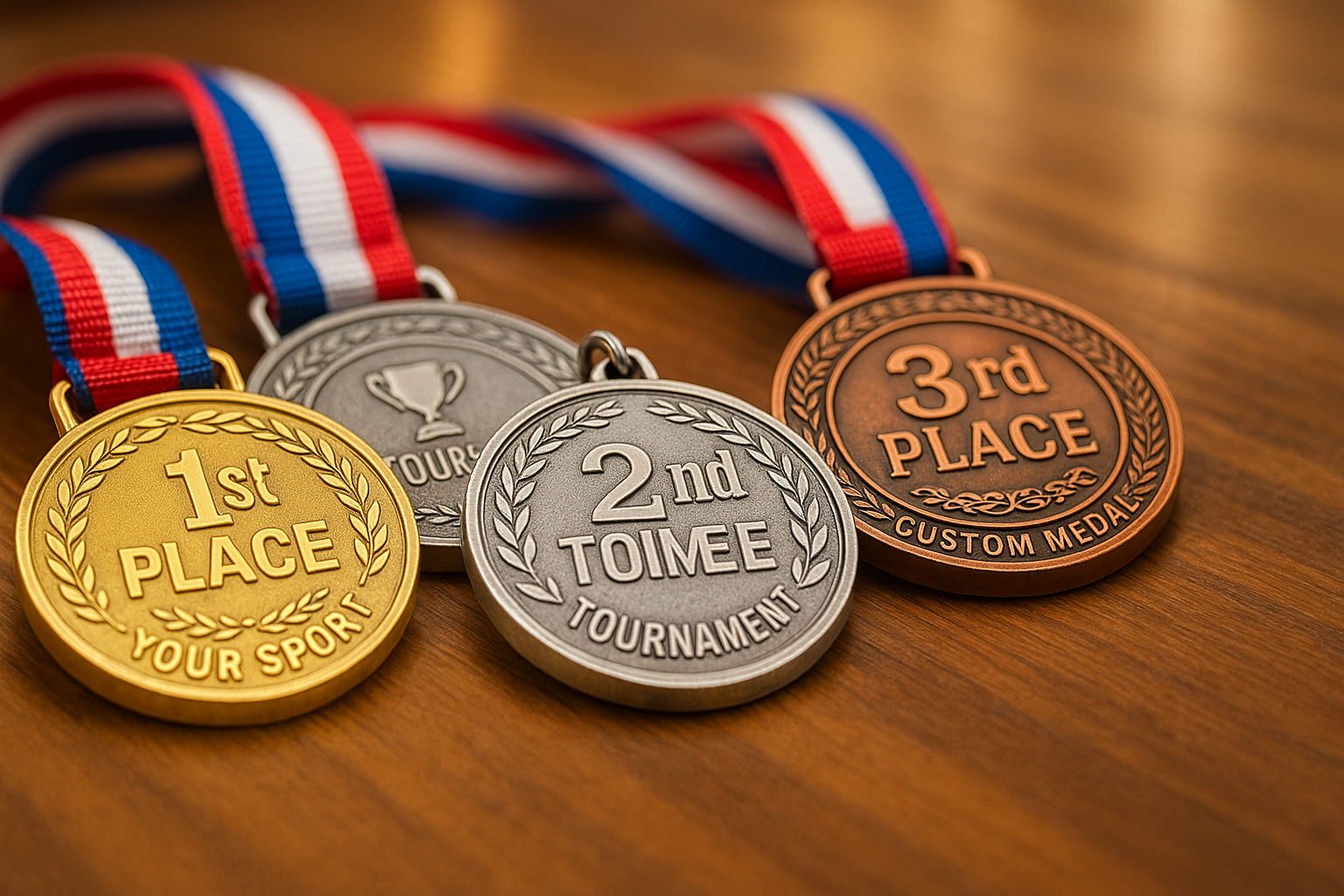
- Gold Sports Medals – Traditionally awarded to first-place winners, gold medals symbolize excellence, victory, and the highest level of performance.
- Silver Medals – Awarded to second-place finishers, silver medals highlight strong performance and competitive spirit.
- Bronze Medals – Given to third-place winners, bronze medals recognize effort and achievement at a high standard.
- Custom Sports Medals – Many schools, clubs, and organizations create custom sports medals featuring logos, names, or event details.
- Participation Medals – These medals encourage inclusivity and celebrate participation, especially in youth sports and community events.
- Commemorative Medals – Beyond competition, these medals are designed to mark special occasions, anniversaries, or historic events in sports.
Materials and Design of Sports Medals
The design of a sports medal is as important as its meaning. Traditionally, medals are made from metals such as bronze, silver, and gold plating, but modern sports medals can also include zinc alloys, brass, or even eco-friendly materials.
Key design elements include:
- Shape and size: From classic round medals to modern custom shapes.
- Ribbon or lanyard: Usually color-coded to represent the level of achievement or event.
- Engraving: Event names, logos, and athletes’ names can be inscribed.
- Finish: Polished, antique, matte, or dual-tone finishes enhance visual appeal.
The design of medals often reflects the identity of the sport or event, making each award unique.
Sports and Events Where Medals Are Awarded
Sports medals are awarded across various disciplines, from athletics to team sports. Common events include:
- Olympic Games – The most iconic sports medals worldwide.
- School and College Tournaments – Recognizing young athletes.
- Marathons and Races – Finisher medals for participants and winners.
- Martial Arts & Combat Sports – Medals for weight classes and categories.
- Team Sports (Soccer, Basketball, Hockey, etc.) – Awarded to both individuals and entire teams.
- Special Needs and Inclusive Sports – Celebrating participation and achievements for all athletes.
No matter the level of competition, medals help celebrate both participation and victory.
The Importance of Sports Medals
Sports medals carry symbolic and motivational value for athletes, coaches, and organizations.
- Recognition of Achievement – A medal represents an athlete’s hard work, skill, and commitment.
- Motivation for Future Success – Athletes often push harder after experiencing the pride of winning a medal.
- Emotional Significance – Medals are lifelong reminders of dedication and triumph.
- Team Spirit – For group sports, medals build unity and recognition among team members.
- Encouragement for Youth – Even participation medals inspire young athletes to continue sports.
Sports medals are not only physical rewards but also lifelong symbols of success.
How Sports Medals Are Made
The process of making sports medals blends craftsmanship and technology.
- Designing – Graphic designers create a custom design with event logos and details.
- Molding – The design is transferred onto molds for shaping the medal.
- Casting or Stamping – Medals are formed using metal alloys.
- Polishing & Finishing – To enhance shine and durability.
- Plating – Gold, silver, or bronze plating gives medals their final identity.
- Engraving & Customization – Names, years, and achievements are inscribed.
- Ribbon Attachment – Finally, medals are paired with ribbons for presentation.
This process ensures every medal is unique and meaningful for its recipient.
Custom Sports Medals
Custom sports medals have gained popularity in recent years. Organizations, schools, and clubs often prefer personalized medals that showcase their logos, branding, and event themes.
Benefits of custom sports medals include:
- Enhanced branding for events.
- Personal touch for athletes and participants.
- Flexibility in size, shape, and color.
- Affordable and scalable for both small and large events.
Custom medals make the achievement even more memorable for athletes while giving events a distinct identity.
Collecting and Preserving Sports Medals
Beyond winning, many athletes and enthusiasts collect sports medals as part of sports history. Preserving them is important to maintain their condition:
- Display Cases: Protect medals from dust and damage.
- Cleaning: Use mild cleaning solutions for metals.
- Avoid Moisture: Store medals in dry environments to prevent corrosion.
- Documentation: Keeping records of when and where medals were won adds historical value.
For some, medals become cherished family heirlooms passed down through generations.
Future Trends in Sports Medals
Sports medals continue to evolve with modern design trends and technology. Some future directions include:
- Eco-friendly medals made from recycled materials.
- Digital medals and NFTs for virtual recognition in e-sports.
- Augmented reality (AR) features where scanning a medal shows event highlights.
- 3D printing for faster and more customized medal production.
These innovations ensure sports medals remain relevant in the digital age while keeping their symbolic value intact.
Conclusion
Sports medals are more than decorative items—they are powerful symbols of dedication, achievement, and recognition. From the ancient Olympics to today’s modern tournaments, medals have inspired athletes and united teams across the globe. Whether gold, silver, bronze, or custom-made, each sports medal tells a story of perseverance and success.
For athletes, receiving a medal is not just about winning—it’s about the journey, the struggle, and the pride of accomplishment. As sports continue to evolve, the tradition of awarding medals will remain a timeless way to honor excellence.


Hi, this is a comment.
To get started with moderating, editing, and deleting comments, please visit the Comments screen in the dashboard.
Commenter avatars come from Gravatar.